Vestiaire Collective
2026
B2C App
•
Case Study
Vestiaire Collective is a pre-owned luxury fashion marketplace founded in 2009, now boasting 18 million users and 5 million items for sale. While professional and semi-professional sellers make up a small share of the seller base, they drive a disproportionate share of sales. With 80% of sellers offering price reductions, the platform relies on active sellers—whose management tools haven't kept pace.
How can we help our users manage their items and maximize their sales?
Vestiaire Collective
2026
B2C App
•
Case Study
Vestiaire Collective is a pre-owned luxury fashion marketplace founded in 2009, now boasting 18 million users and 5 million items for sale. While professional and semi-professional sellers make up a small share of the seller base, they drive a disproportionate share of sales. With 80% of sellers offering price reductions, the platform relies on active sellers—whose management tools haven't kept pace.
How can we help our users manage their items and maximize their sales?
Vestiaire Collective
2026
B2C App
•
Case Study
Vestiaire Collective is a pre-owned luxury fashion marketplace founded in 2009, now boasting 18 million users and 5 million items for sale. While professional and semi-professional sellers make up a small share of the seller base, they drive a disproportionate share of sales. With 80% of sellers offering price reductions, the platform relies on active sellers—whose management tools haven't kept pace.
How can we help our users manage their items and maximize their sales?

PROJECT DETAILS
Industry
Pre-owned marketplace
Time
Two weeks
Location
The Design Crew Bootcamp - Paris, FR
Process
Discovery to Delivery
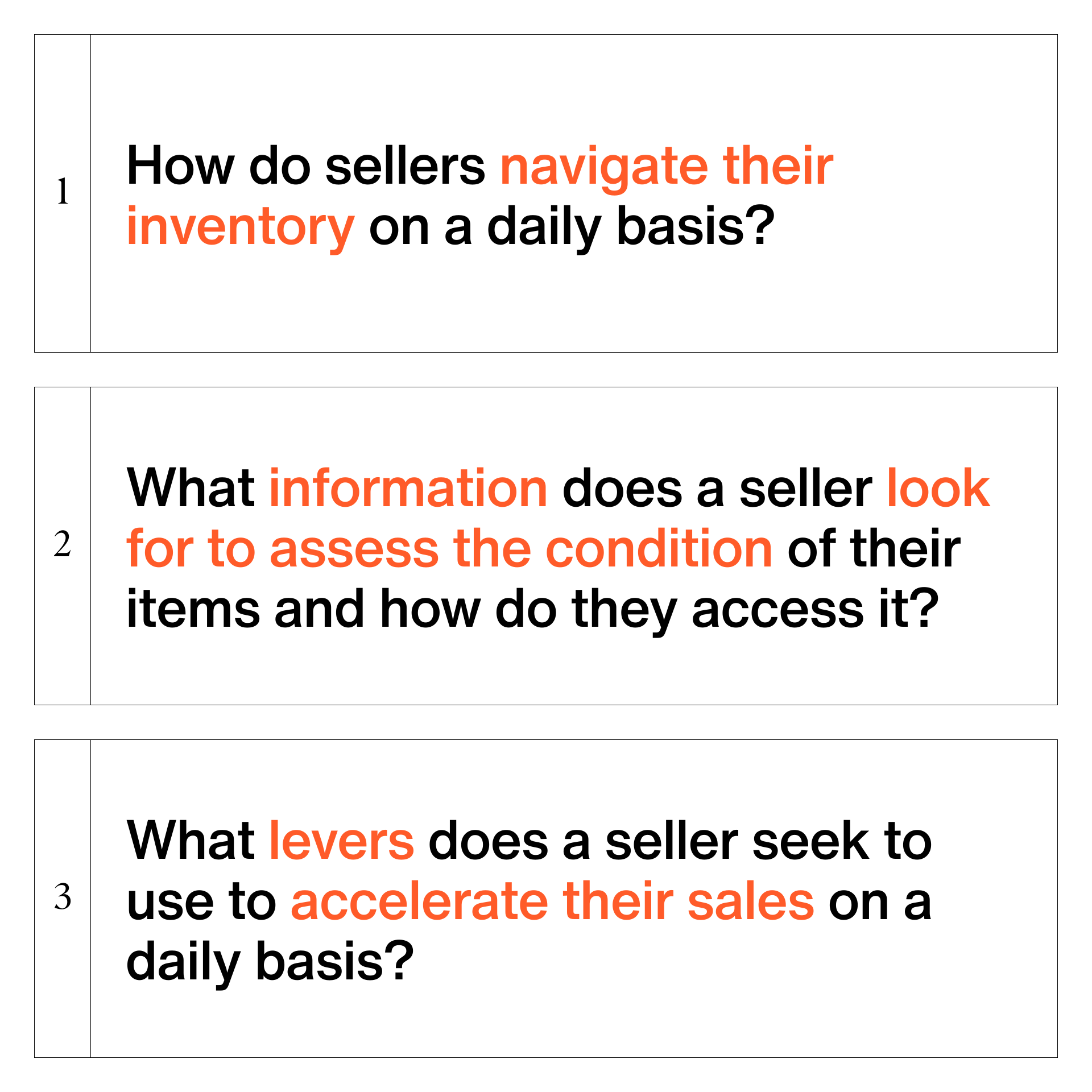
How to approach a broad research question
The research question is structured around two distinct sub-parts. To frame it, each verb — manage and maximise — is broken down semantically to surface its multiple meanings and open up the exploration space.
In parallel, an audit of the existing app, a competitive analysis, and verbatims from the Vestiaire Collective brief are used to identify the key pain points for each sub-part.
Forum and marketplace reviews (App Store, Google Play) did not yield precise insights on the research question. Given the difficulty of recruiting sellers exclusively from Vestiaire Collective, the research objectives are broadened — applicable to sellers on other platforms such as Vinted — while still addressing the questions left open at the end of this phase.
How to approach a broad research question
The research question is structured around two distinct sub-parts. To frame it, each verb — manage and maximise — is broken down semantically to surface its multiple meanings and open up the exploration space.
In parallel, an audit of the existing app, a competitive analysis, and verbatims from the Vestiaire Collective brief are used to identify the key pain points for each sub-part.
Forum and marketplace reviews (App Store, Google Play) did not yield precise insights on the research question. Given the difficulty of recruiting sellers exclusively from Vestiaire Collective, the research objectives are broadened — applicable to sellers on other platforms such as Vinted — while still addressing the questions left open at the end of this phase.
How to approach a broad research question
The research question is structured around two distinct sub-parts. To frame it, each verb — manage and maximise — is broken down semantically to surface its multiple meanings and open up the exploration space.
In parallel, an audit of the existing app, a competitive analysis, and verbatims from the Vestiaire Collective brief are used to identify the key pain points for each sub-part.
Forum and marketplace reviews (App Store, Google Play) did not yield precise insights on the research question. Given the difficulty of recruiting sellers exclusively from Vestiaire Collective, the research objectives are broadened — applicable to sellers on other platforms such as Vinted — while still addressing the questions left open at the end of this phase.

Recruiting sellers for user interviews
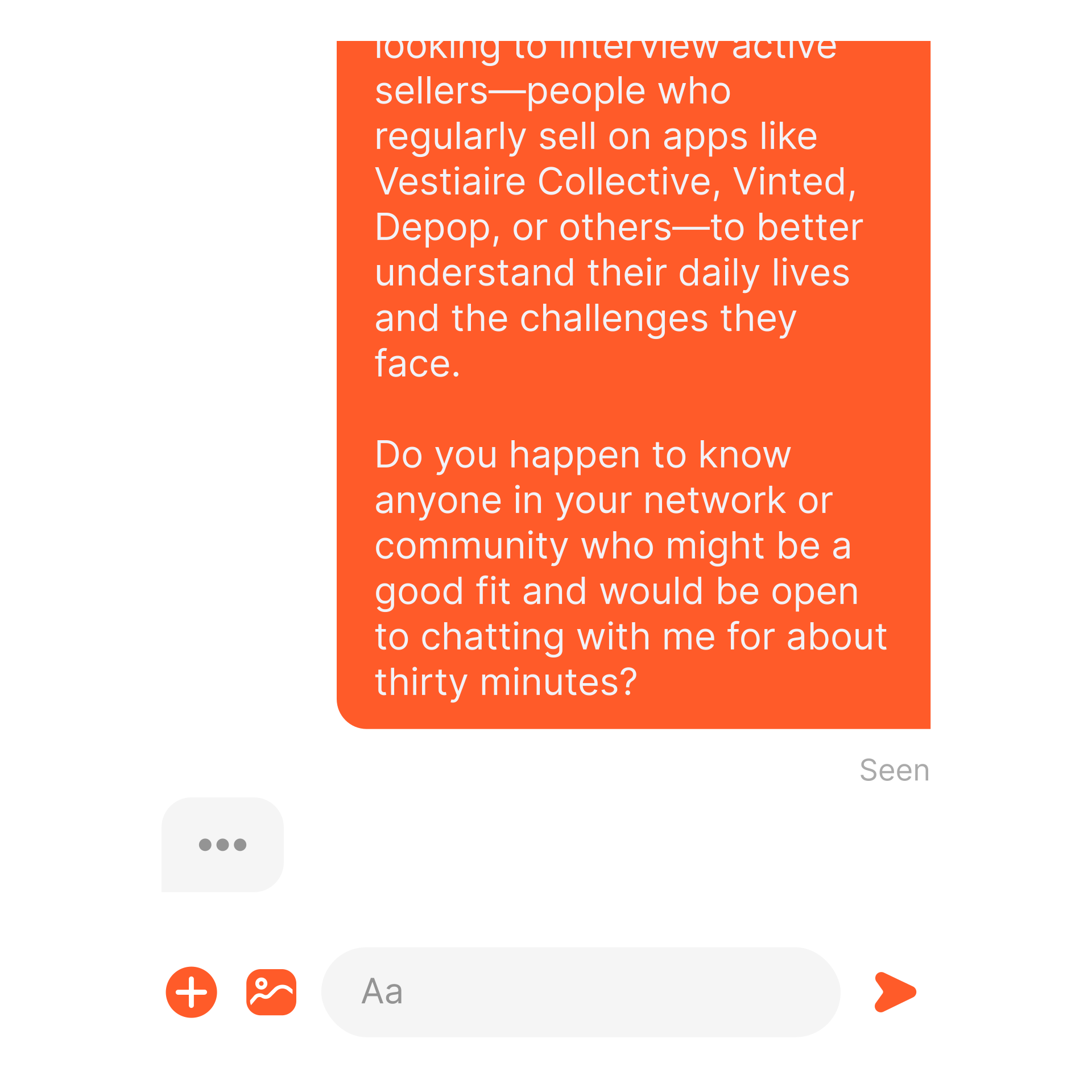
Participants are recruited through DMs sent to fashion influencers on Instagram, asking whether they sell on secondhand platforms or know sellers within their network or community.
This approach leads to four participants: three semi-pro sellers (100+ active listings) and one engaged seller (10 to 20 listings).
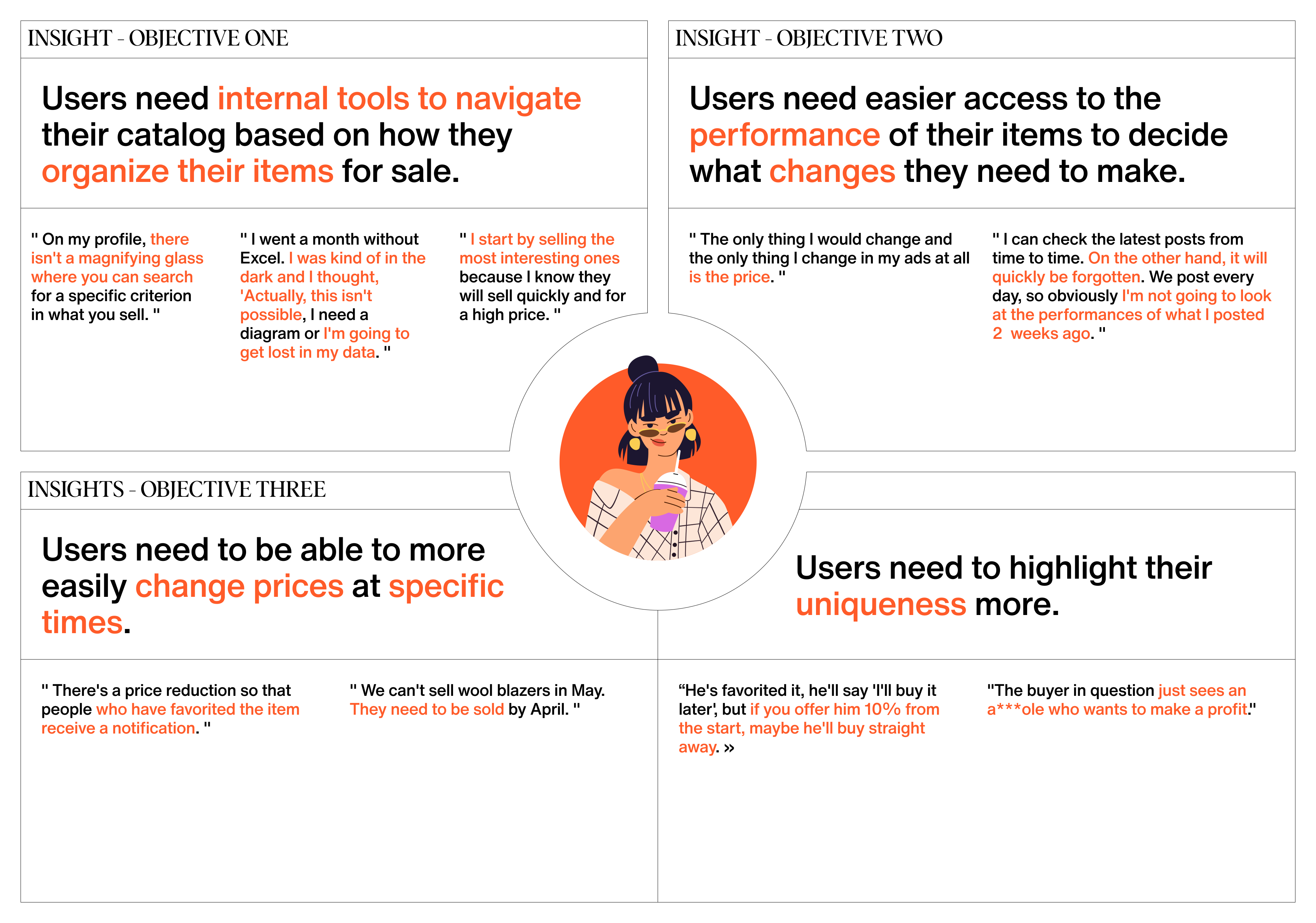
The interviews surface three key insights, one per research objective.
Objective 1 — Listing management
3/4 want a search system within their catalog
4/4 use an external spreadsheet to track their stock
3/4 prioritise items by value or sales potential before listing
Objective 2 — Performance
4/4 manually look up their stats due to a lack of automatic alerts
3/4 use the favourites-to-views ratio as their main indicator
3/4 only edit the price after publishing
Objective 3 — Maximising sales
3/4 use price drops as a sales lever
2/4 are triggered by seasonality
3/4 send proactive messages to potential buyers
3/4 emphasise authenticity and personality in customer interactions
Recruiting sellers for user interviews
Participants are recruited through DMs sent to fashion influencers on Instagram, asking whether they sell on secondhand platforms or know sellers within their network or community.
This approach leads to four participants: three semi-pro sellers (100+ active listings) and one engaged seller (10 to 20 listings).
The interviews surface three key insights, one per research objective.
Objective 1 — Listing management
3/4 want a search system within their catalog
4/4 use an external spreadsheet to track their stock
3/4 prioritise items by value or sales potential before listing
Objective 2 — Performance
4/4 manually look up their stats due to a lack of automatic alerts
3/4 use the favourites-to-views ratio as their main indicator
3/4 only edit the price after publishing
Objective 3 — Maximising sales
3/4 use price drops as a sales lever
2/4 are triggered by seasonality
3/4 send proactive messages to potential buyers
3/4 emphasise authenticity and personality in customer interactions
Recruiting sellers for user interviews
Participants are recruited through DMs sent to fashion influencers on Instagram, asking whether they sell on secondhand platforms or know sellers within their network or community.
This approach leads to four participants: three semi-pro sellers (100+ active listings) and one engaged seller (10 to 20 listings).
The interviews surface three key insights, one per research objective.
Objective 1 — Listing management
3/4 want a search system within their catalog
4/4 use an external spreadsheet to track their stock
3/4 prioritise items by value or sales potential before listing
Objective 2 — Performance
4/4 manually look up their stats due to a lack of automatic alerts
3/4 use the favourites-to-views ratio as their main indicator
3/4 only edit the price after publishing
Objective 3 — Maximising sales
3/4 use price drops as a sales lever
2/4 are triggered by seasonality
3/4 send proactive messages to potential buyers
3/4 emphasise authenticity and personality in customer interactions
From insights to prototype testing
Following the research insights, the problem statement is reframed:
How might we help sellers manage and showcase their catalog while giving them the ability to express their uniqueness?
Three axes structure the new features — Manage, Showcase, Express — tested across several prototype flows: advanced filters and sorting, a statistics page, bulk price drops, listing boosts, and a personalised offer sent to an interested member based on the items they have favourited.
User tests are conducted with three participants: one semi-pro seller from the initial interviews, and two casual sellers newly recruited. Some components are validated, while others reveal friction points that inform the next iterations.
The new features rely on the UI kit provided by Vestiaire Collective, reused as much as possible to ensure a seamless integration with the existing interface. This approach helps ensure that friction points identified during testing relate to wording clarity and navigation intuitiveness, rather than the components' visual form.
From insights to prototype testing
Following the research insights, the problem statement is reframed:
How might we help sellers manage and showcase their catalog while giving them the ability to express their uniqueness?
Three axes structure the new features — Manage, Showcase, Express — tested across several prototype flows: advanced filters and sorting, a statistics page, bulk price drops, listing boosts, and a personalised offer sent to an interested member based on the items they have favourited.
User tests are conducted with three participants: one semi-pro seller from the initial interviews, and two casual sellers newly recruited. Some components are validated, while others reveal friction points that inform the next iterations.
The new features rely on the UI kit provided by Vestiaire Collective, reused as much as possible to ensure a seamless integration with the existing interface. This approach helps ensure that friction points identified during testing relate to wording clarity and navigation intuitiveness, rather than the components' visual form.
From insights to prototype testing
Following the research insights, the problem statement is reframed:
How might we help sellers manage and showcase their catalog while giving them the ability to express their uniqueness?
Three axes structure the new features — Manage, Showcase, Express — tested across several prototype flows: advanced filters and sorting, a statistics page, bulk price drops, listing boosts, and a personalised offer sent to an interested member based on the items they have favourited.
User tests are conducted with three participants: one semi-pro seller from the initial interviews, and two casual sellers newly recruited. Some components are validated, while others reveal friction points that inform the next iterations.
The new features rely on the UI kit provided by Vestiaire Collective, reused as much as possible to ensure a seamless integration with the existing interface. This approach helps ensure that friction points identified during testing relate to wording clarity and navigation intuitiveness, rather than the components' visual form.


Most friction came from a single flow
The tests surface friction points almost entirely concentrated in Flow 2 — sending a personalised offer to an interested member based on their favorites — while Flow 1 (filters, sorting and bulk price drops) is fully validated.
Wayfinding and flow comprehension
0/3 easily locate the "interested members" section
2/3 confuse "favourites" with "interested members"
0/3 understand the expected next action from the filtered "interested members" page
Selection and offer creation
1/3 doesn't see the point of the "lower price" and "boost" CTAs in an offer-creation context, a fair observation, as the default product card was reused as-is without adapting these actions to the new context
1/3 tries to add items first before selecting from favourites
2/3 would like a more intuitive, better-guided flow between price and duration
Perceived value of the feature
2/3 recognise the benefit of reaching out to a potential buyer based on their favourites, including the semi-pro seller, who relates this to a proactive sales approach from his in-store experience

Most friction came from a single flow
The tests surface friction points almost entirely concentrated in Flow 2 — sending a personalised offer to an interested member based on their favorites — while Flow 1 (filters, sorting and bulk price drops) is fully validated.
Wayfinding and flow comprehension
0/3 easily locate the "interested members" section
2/3 confuse "favourites" with "interested members"
0/3 understand the expected next action from the filtered "interested members" page
Selection and offer creation
1/3 doesn't see the point of the "lower price" and "boost" CTAs in an offer-creation context, a fair observation, as the default product card was reused as-is without adapting these actions to the new context
1/3 tries to add items first before selecting from favourites
2/3 would like a more intuitive, better-guided flow between price and duration
Perceived value of the feature
2/3 recognise the benefit of reaching out to a potential buyer based on their favourites, including the semi-pro seller, who relates this to a proactive sales approach from his in-store experience
Most friction came from a single flow
The tests surface friction points almost entirely concentrated in Flow 2 — sending a personalised offer to an interested member based on their favorites — while Flow 1 (filters, sorting and bulk price drops) is fully validated.
Wayfinding and flow comprehension
0/3 easily locate the "interested members" section
2/3 confuse "favourites" with "interested members"
0/3 understand the expected next action from the filtered "interested members" page
Selection and offer creation
1/3 doesn't see the point of the "lower price" and "boost" CTAs in an offer-creation context, a fair observation, as the default product card was reused as-is without adapting these actions to the new context
1/3 tries to add items first before selecting from favourites
2/3 would like a more intuitive, better-guided flow between price and duration
Perceived value of the feature
2/3 recognise the benefit of reaching out to a potential buyer based on their favourites, including the semi-pro seller, who relates this to a proactive sales approach from his in-store experience

Sorting friction by impact and effort
While the tests surface a significant number of friction points, most prove quick and easy to fix. The prioritisation matrix highlights a cluster of quick wins — high impact, low effort — which the iterations focus on first.
Sorting friction by impact and effort
While the tests surface a significant number of friction points, most prove quick and easy to fix. The prioritisation matrix highlights a cluster of quick wins — high impact, low effort — which the iterations focus on first.
Sorting friction by impact and effort
While the tests surface a significant number of friction points, most prove quick and easy to fix. The prioritisation matrix highlights a cluster of quick wins — high impact, low effort — which the iterations focus on first.


Iterating on the quick wins
Based on this prioritisation, several iterations are made to address the identified friction points:
Unclear statistics → added a "Total..." label to clarify cumulative data (views, favourites)
Unclear next action on the "interested member" card → reused a component already validated in Flow 1: an overlay opens on tap to clarify available actions. Also added the ability to tap the member's profile photo to view their account and get a better sense of who they are
Out-of-context "lower price"/"boost" CTAs on the interested member card → replaced with a single "View listing" CTA, to avoid derailing the user from their core task
Unclear selection affordance, leading some users to try adding an item before selecting their favourites → all CTAs set to disabled until a selection is made, to clarify the order of actions
Guidance missing in price → duration flow → added an explicit CTA to move to the next step, alongside the existing tab bar
Low-visibility "add an item" CTA (Flow 3) → added a "+" icon for better visibility, without adding contrast, to preserve hierarchy with the primary CTA

Iterating on the quick wins
Based on this prioritisation, several iterations are made to address the identified friction points:
Unclear statistics → added a "Total..." label to clarify cumulative data (views, favourites)
Unclear next action on the "interested member" card → reused a component already validated in Flow 1: an overlay opens on tap to clarify available actions. Also added the ability to tap the member's profile photo to view their account and get a better sense of who they are
Out-of-context "lower price"/"boost" CTAs on the interested member card → replaced with a single "View listing" CTA, to avoid derailing the user from their core task
Unclear selection affordance, leading some users to try adding an item before selecting their favourites → all CTAs set to disabled until a selection is made, to clarify the order of actions
Guidance missing in price → duration flow → added an explicit CTA to move to the next step, alongside the existing tab bar
Low-visibility "add an item" CTA (Flow 3) → added a "+" icon for better visibility, without adding contrast, to preserve hierarchy with the primary CTA
Iterating on the quick wins
Based on this prioritisation, several iterations are made to address the identified friction points:
Unclear statistics → added a "Total..." label to clarify cumulative data (views, favourites)
Unclear next action on the "interested member" card → reused a component already validated in Flow 1: an overlay opens on tap to clarify available actions. Also added the ability to tap the member's profile photo to view their account and get a better sense of who they are
Out-of-context "lower price"/"boost" CTAs on the interested member card → replaced with a single "View listing" CTA, to avoid derailing the user from their core task
Unclear selection affordance, leading some users to try adding an item before selecting their favourites → all CTAs set to disabled until a selection is made, to clarify the order of actions
Guidance missing in price → duration flow → added an explicit CTA to move to the next step, alongside the existing tab bar
Low-visibility "add an item" CTA (Flow 3) → added a "+" icon for better visibility, without adding contrast, to preserve hierarchy with the primary CTA

What this solves and what's next
The project addresses the reframed problem statement through three complementary axes:
Manage — an "Annonces" page with search bar and advanced filters/sorting, and a "Statistics" page offering an overview to act directly from that page
Showcase — a quick and simple listing boost, and a bulk price drop enabling faster decision-making through filters
Express — creating a personalised offer based on a member's favourites, to bring back the advice and proactiveness of a real in-store selling experience
Several directions remain to explore going forward:
Re-testing the corrected iterations to validate they actually resolve the identified friction points
Further developing the Express axis with new features, to better address the authenticity needs raised in interviews — an axis that remained underdeveloped given the two-week timeframe of this sprint
What this solves and what's next
The project addresses the reframed problem statement through three complementary axes:
Manage — an "Annonces" page with search bar and advanced filters/sorting, and a "Statistics" page offering an overview to act directly from that page
Showcase — a quick and simple listing boost, and a bulk price drop enabling faster decision-making through filters
Express — creating a personalised offer based on a member's favourites, to bring back the advice and proactiveness of a real in-store selling experience
Several directions remain to explore going forward:
Re-testing the corrected iterations to validate they actually resolve the identified friction points
Further developing the Express axis with new features, to better address the authenticity needs raised in interviews — an axis that remained underdeveloped given the two-week timeframe of this sprint
What this solves and what's next
The project addresses the reframed problem statement through three complementary axes:
Manage — an "Annonces" page with search bar and advanced filters/sorting, and a "Statistics" page offering an overview to act directly from that page
Showcase — a quick and simple listing boost, and a bulk price drop enabling faster decision-making through filters
Express — creating a personalised offer based on a member's favourites, to bring back the advice and proactiveness of a real in-store selling experience
Several directions remain to explore going forward:
Re-testing the corrected iterations to validate they actually resolve the identified friction points
Further developing the Express axis with new features, to better address the authenticity needs raised in interviews — an axis that remained underdeveloped given the two-week timeframe of this sprint